
Upcoming Events
ESPC Coalition Annual Meeting | April 24th
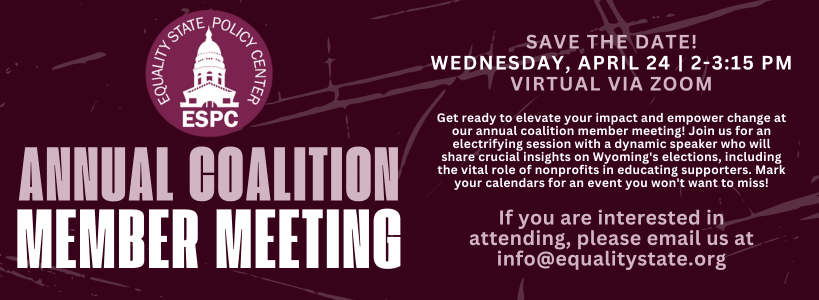
ESPC is hosting its Annual Coalition Meeting on April 24th at 2pm! Pending more information, please email info@equalitystate.org with questions.
Join ESPC and Wyoming Tax Facts as we launch into our May 29th Tax Facts Webinar!
Latest News

The Equality State Policy Center Announces Wyoming Campaign Finance Report
March 29, 2024 FOR IMMEDIATE RELEASE The Equality State Policy Center Announces Wyoming Campaign Finance Report Laramie, WY- In light of the escalating concern over campaign finance practices impacting Wyoming’s elections, the Equality State Policy Center (ESPC) has released a report brief on political campaign spending in the state. “Expenditures by political candidates and contributions …
The Equality State Policy Center Announces Wyoming Campaign Finance Report Read More »
Read More
Tax Takeaways from the 2024 Budget Session with Senator Tara Nethercott and Representative Dan Zwonitzer
Cheyenne, WY — On Wednesday, March 27th, the grassroots initiative Wyoming Tax Facts and the Equality State Policy Center will co-host a Tax Facts: Lunch & Learn webinar reviewing the tax implications of the 2024 Budget Session with Senator Tara Nethercott and Representative Dan Zwonitzer. This session is the fourth installment of the Tax Facts: …
Read More
Capitol Collaboration Day: A special event dedicated to bringing together the vibrant Latino and Hispanic communities in Wyoming to the State Capitol
CHEYENNE, WY- Wyoming Independent Citizens Coalition (WICC), Wyoming Citizen Network (WyCEN), and Equality State Policy Center’s The Chair Project express sincere gratitude to Representative JT Larson, Senator Chris Rothfuss, Senator Eric Barlow, and Senator Lynn Hutchings for their unwavering support of Capitol Collaboration Day, a landmark event aimed at fostering unity and engagement within Wyoming’s …
Read More
Wyoming’s Taxes Determine Wyoming’s Future: A Conversation with Gov. Dave Freudenthal and Wyoming Senator Cale Case
CHEYENNE, Wyo — On Wednesday, January 31, grassroots initiative Wyoming Tax Facts will host a Tax Facts Lunch & Learn webinar on Wyoming’s tax structure with Former Governor Dave Freudenthal—author of the recent book “Wyoming: The Paradox of Plenty”—and Wyoming Senator Cale Case, former Chairman of the Senate Revenue Committee. Moderated by Sue Sommers, the …
Read More
PRESS RELEASE: ESPC Announces SHAPE 2024
FOR IMMEDIATE RELEASE January 5, 2024 Media Contact: Rosa Reyna-Pughinfo@equalitystate.org, 307-228-4163 Laramie, WY — The Equality State Policy Center is excited to announce that SHAPE Wyoming 2024 will take place virtually on February 19th from 9:00am-4:00pm. SHAPE WY is a free virtual citizen lobbyist training designed to give you the tools you need to be …
PRESS RELEASE: ESPC Announces SHAPE 2024 Read More »
Read MoreStay Connected
By signing up with the Equality State Policy Center, you'll receive updates on our work to improve the lives of all of Wyoming's people through transparent government, fair elections, and thriving communities. We advance our vision by advocating in all levels of government, increasing civic engagement both inside and outside of governmental processes, and holding our elected officials accountable for the decisions they make across Wyoming.